
Engineering and Validation
Real-World CNC Performance Testing
Fusion CNC uses real-world CNC performance testing and engineering validation to prove every claim we make. From spindle power to deflection, positional accuracy, and chip load, every result on this page is measured, not assumed.
Engineered, Not Weighted Down
The Fusion Pro CNC was not built overnight, and it was not copied from what everyone else is doing.
It came from years of working with CNC routers across hobby, prosumer, and professional environments, and seeing exactly where they fail. Machines that flex under load. Systems that lose accuracy the moment you push them. Designs that rely on weight instead of engineering.
So we did something different.
Instead of chasing mass like traditional industrial CNC machines, we focused on structural efficiency, load paths, and real-world performance. Every component, from the rails to the carriage system to the table and stand, was engineered as part of a complete system.
We designed custom aluminum extrusions for each axis, built specifically to maintain alignment under cutting forces. Then we validated motion system options using simulation and testing, comparing belts, rack and pinion, and ball screws.
The result was clear. We chose ball screws for their precision, repeatability, and long-term reliability, which are key characteristics of any professional CNC machine.
Real-World Problems We Solved
Debris damaging motion systems
Solved with sealed rails and spring-steel covers
Excessive maintenance
Reduced through controlled lubrication design
Noise and instability
Minimized through structural integration
Stand flex and vibration
Eliminated by engineering the base as part of the machine
This is what separates engineered systems from assembled machines. If you are not sure where your current machine falls, it is worth reading What is a Professional CNC Machine to understand the difference between hobby, prosumer, and professional-grade equipment.
Where Engineering Meets Reality
Simulation matters, but it is not enough.
You do not truly understand a CNC machine until you test it under real cutting conditions. That is why we have spent hundreds of hours validating the Fusion Pro CNC in real-world environments.
Not ideal scenarios. Not best-case conditions.
Actual cutting loads. Real materials. Measurable results.
Because in the end, CNC machine performance is defined by what it does under load, not what a model predicts. That is why real-world CNC performance testing matters.
Five Tests. Measurable Results.
Every performance claim on this site is backed by a specific test with a specific instrument and a specific result. Here is how we use CNC performance testing to validate the Fusion Pro CNC.
Spindle Power: Measured, Not Assumed
Spindle ratings are one of the most misunderstood parts of CNC machines. A lot of companies list power numbers but do not explain how they were measured.
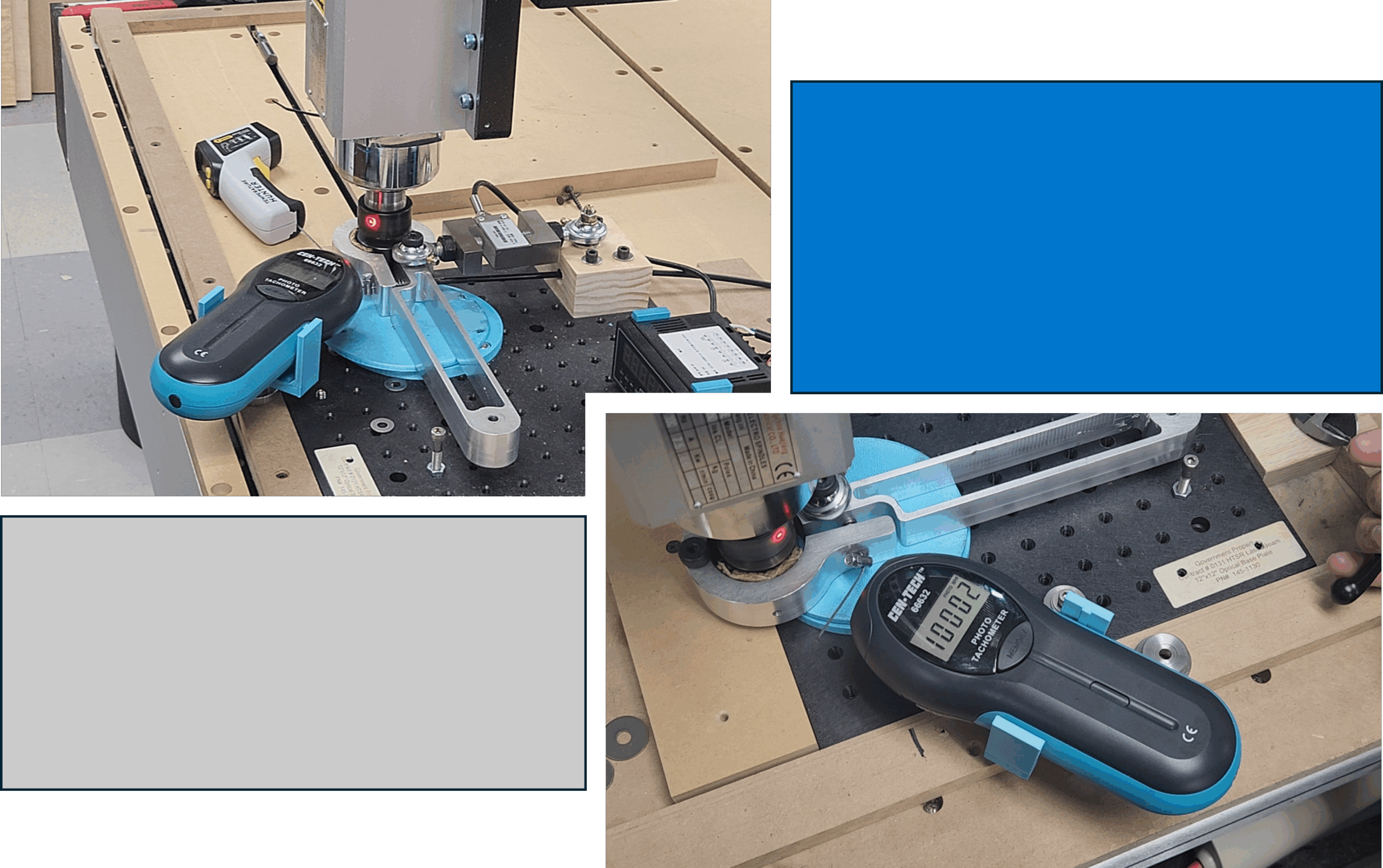
So we measured ours directly. Using a Prony brake and tachometer, we tested torque and RPM at stall conditions to calculate real horsepower under load. This gives us accurate, verifiable performance data, not theoretical values.
Why does that matter? Because during real cutting operations, the spindle maintains torque, feed rates stay consistent, and cuts do not degrade under load.
If you are comparing machines, this is one of the biggest differences between router-based systems and true spindle-driven CNC machines.
- Instrument: Prony brake and tachometer
- Method: Stall torque and RPM measurement under load
- Result: Verifiable horsepower and torque data
Lateral Load and Motion System Performance
Every CNC machine experiences lateral cutting forces. That is where weaker systems begin to show their limits: flex, binding, or loss of position.
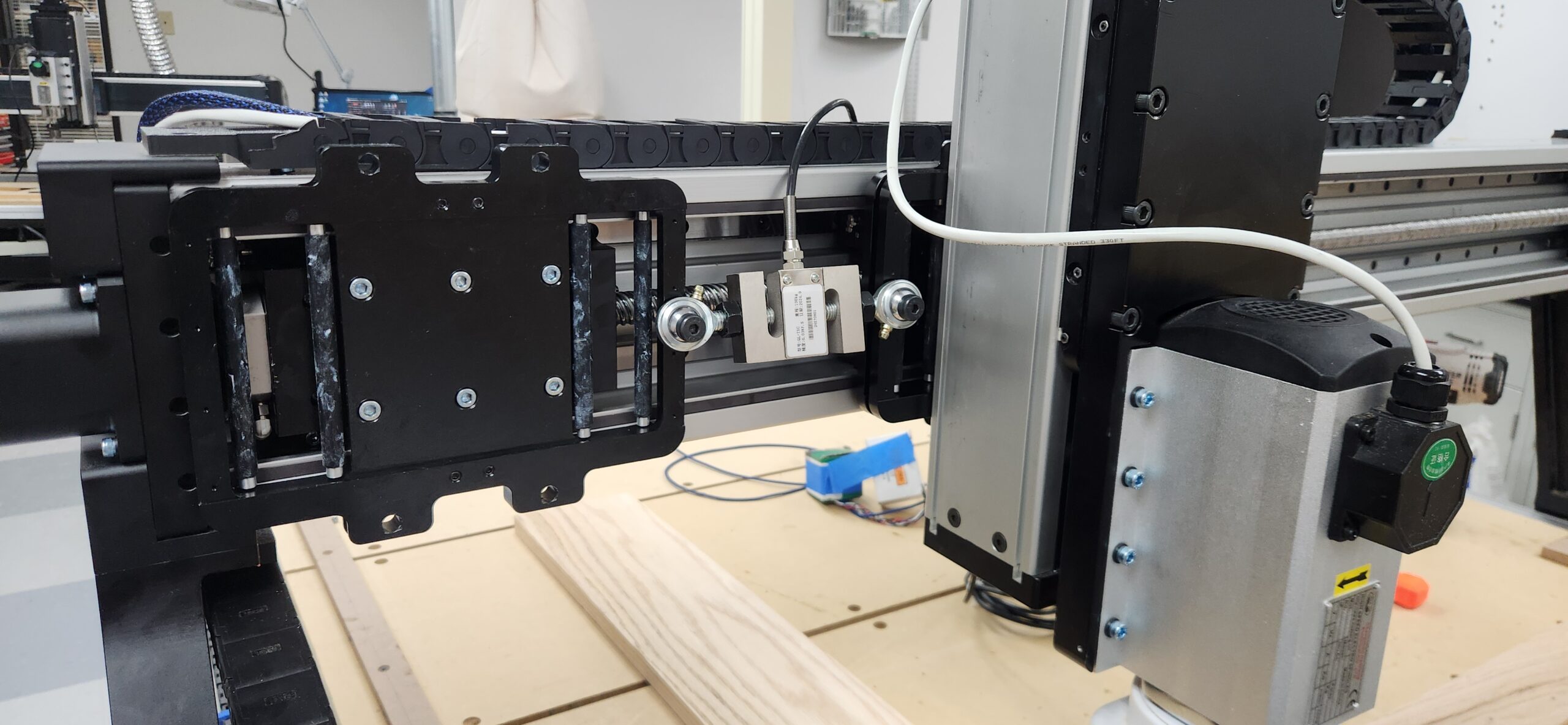
We tested this using a push-pull gauge to measure carriage resistance both at rest and during simulated cutting loads. What we are looking for is not just movement. It is controlled, consistent resistance.
That consistency confirms proper ball screw engagement, rail alignment integrity, and bearing system performance. This is what allows a precision CNC router to maintain accuracy under load instead of degrading during operation.
- Instrument: Push-pull gauge
- Method: Carriage resistance at rest and under simulated cutting load
- Result: Smooth, consistent resistance confirming ball screw and rail integrity
Deflection Testing: Measured Rigidity
Rigidity is one of the most important and most misrepresented metrics in CNC machines. We do not treat it as a claim. We treat it as a measurement.
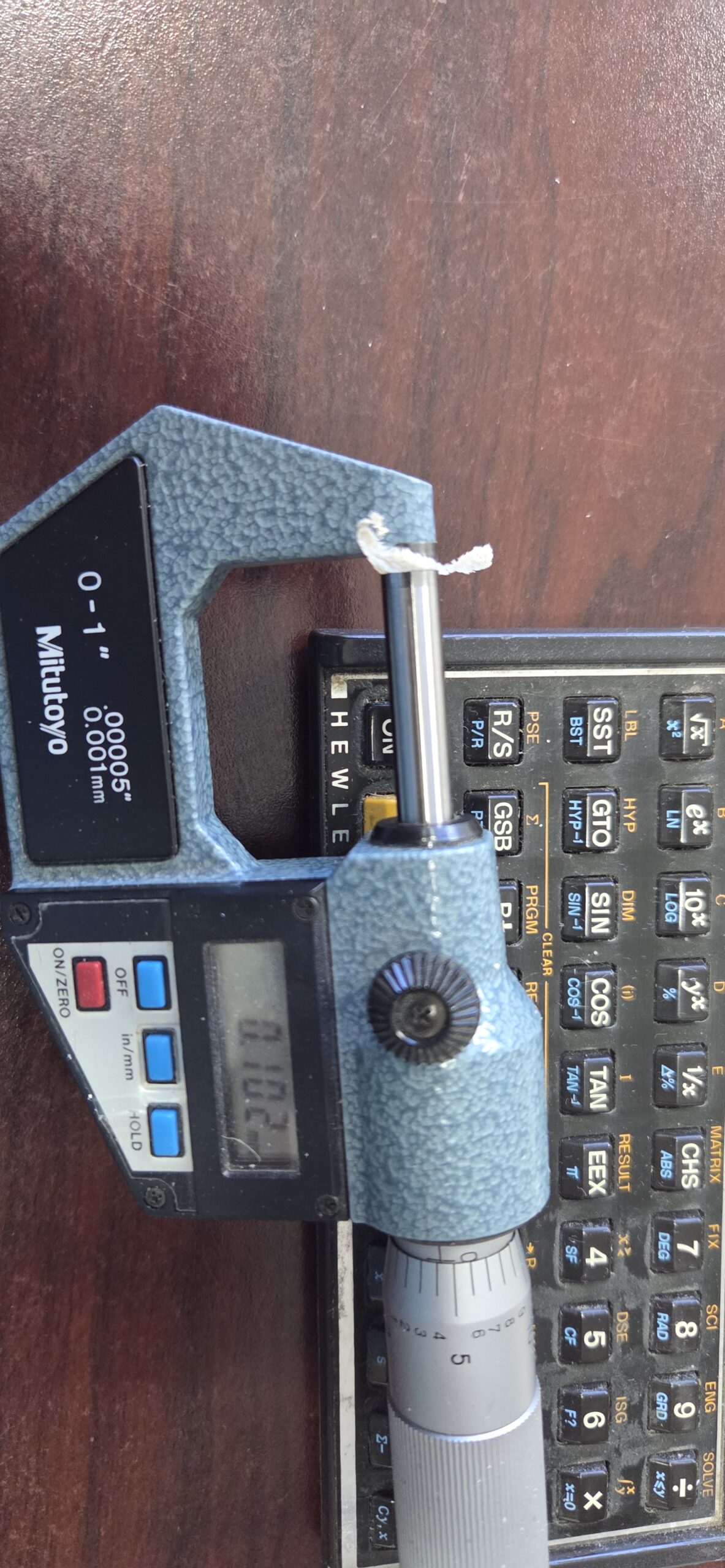
Using controlled load testing with a crane scale to apply force, a digital level to measure angular change, and a micrometer to verify linear movement, we produced a number that is not a simulation result.
It is a measured result from a real machine under real load.
For context, many machines in the hobby and prosumer categories measure deflection in tenths of a millimeter or more under similar conditions. This level of rigidity directly impacts edge quality, dimensional accuracy, and repeatability. If the machine moves, your cut moves.
That is why rigidity is one of the defining characteristics of a professional CNC system.
- Instrument: Crane scale, digital level, micrometer
- Method: Controlled load application with angular and linear measurement
0.008 mm
Measured deflection under maximum load. That is 8 microns. Roughly 15x better than the minimum standard for rigidity in this machine class.
Positional Accuracy and Repeatability
Accuracy is not what the machine is told to do. It is what the machine actually does.
We validate positional accuracy using precision glass DRO scales, measuring commanded movement against actual motion down to the micron level. This allows us to verify positional accuracy, repeatability, and motion system consistency.
For a deeper breakdown of how accuracy, precision, and repeatability differ and why they matter, see our CNC Accuracy and Precision Guide.
When these systems work together correctly, you get consistent, repeatable results across every job.
- Instrument: Precision glass DRO scales
- Method: Commanded movement vs. actual movement, measured to the micron
- Result: Verifiable positional accuracy and repeatability
Chip Load Optimization and Cutting Performance
Chip load is where CNC performance actually shows up. It is the relationship between feed rate, spindle speed, and tool geometry.
If your machine cannot maintain stability under load, you cannot maintain proper chip load, and everything suffers.
The Fusion Pro CNC is designed to hold stability during aggressive cutting, allowing you to run proper feeds and speeds instead of dialing everything back. That results in cleaner cuts, longer tool life, and faster machining times.
If you are learning how to dial this in, our Chip Load Guide and Calculator walks through how to optimize cutting performance across materials.
- Feed rate, spindle speed, and tool geometry in balance
- Stability under aggressive cutting conditions
- Cleaner cuts, longer tool life, faster cycle times
Science Meets Craft
At the end of the day, this is not just about engineering.
It is about trust.
You need a machine that performs the same way on the first cut and the hundredth. That is why every part of the Fusion Pro CNC is engineered intentionally, tested under real conditions, and validated with measurable data.
Because your work depends on consistency. And consistency comes from engineering, not guesswork.
Engineered Intentionally
Every component was designed as part of a complete system, not sourced from a catalog and assembled. Custom extrusions, sealed rails, integrated stand, controlled lubrication.
Tested Under Real Conditions
Hundreds of hours of real-world validation across spindle power, lateral load, deflection, positional accuracy, and chip load. Not simulations. Not best-case scenarios.
Validated with Measurable Data
0.008 mm deflection. Micron-level positional accuracy. Verifiable spindle power under load. Every claim on this site has a number behind it.
Common Questions About CNC Performance Testing and Engineering
Answers to the questions we hear most often about CNC performance testing, machine engineering, and real-world performance standards.
A professional CNC machine is a computer-controlled manufacturing system designed to deliver reliable, repeatable results in real production environments through rigid mechanical structures, precision motion systems, and cutting systems capable of sustained daily operation.
To understand how this compares to hobby and prosumer machines, see our full breakdown: What is a Professional CNC Machine.
A professional CNC machine is defined by its ability to maintain accuracy, repeatability, and performance under sustained load. This includes rigid construction, precision motion systems like ball screws, and validated real-world performance, not just theoretical specifications.
All machines experience some level of deflection under load, but the amount matters. The Fusion Pro CNC measures just 0.008 mm of deflection, which is significantly lower than most hobby CNC routers and many prosumer machines.
Ball screws provide higher accuracy, reduced backlash, and more consistent performance under load. While belts and rack systems can be faster or lower cost, they introduce variability that limits precision, especially in professional applications.
True spindle performance is measured under load using tools like a Prony brake and tachometer. This provides real torque and horsepower data, which is far more accurate than manufacturer-rated values.
Chip load is the amount of material removed per tooth of the cutting tool. Maintaining proper chip load is critical for tool life, cut quality, and machining speed. You can learn more in our Chip Load Guide and Calculator.
Professional CNC machines typically operate within tolerances of plus or minus 0.02 mm or better, depending on design and conditions. The Fusion Pro CNC is engineered and validated within this range through real-world testing.
Yes, if it is engineered correctly. The Fusion Pro CNC achieves rigidity through structural design and material efficiency rather than relying on excessive weight, allowing it to remain both stable and practical for real-world shop environments.
Ready to See It in Action?
If you want to see the machine that backs every one of these claims, configure your Fusion Pro or reach out to talk through your specific application.