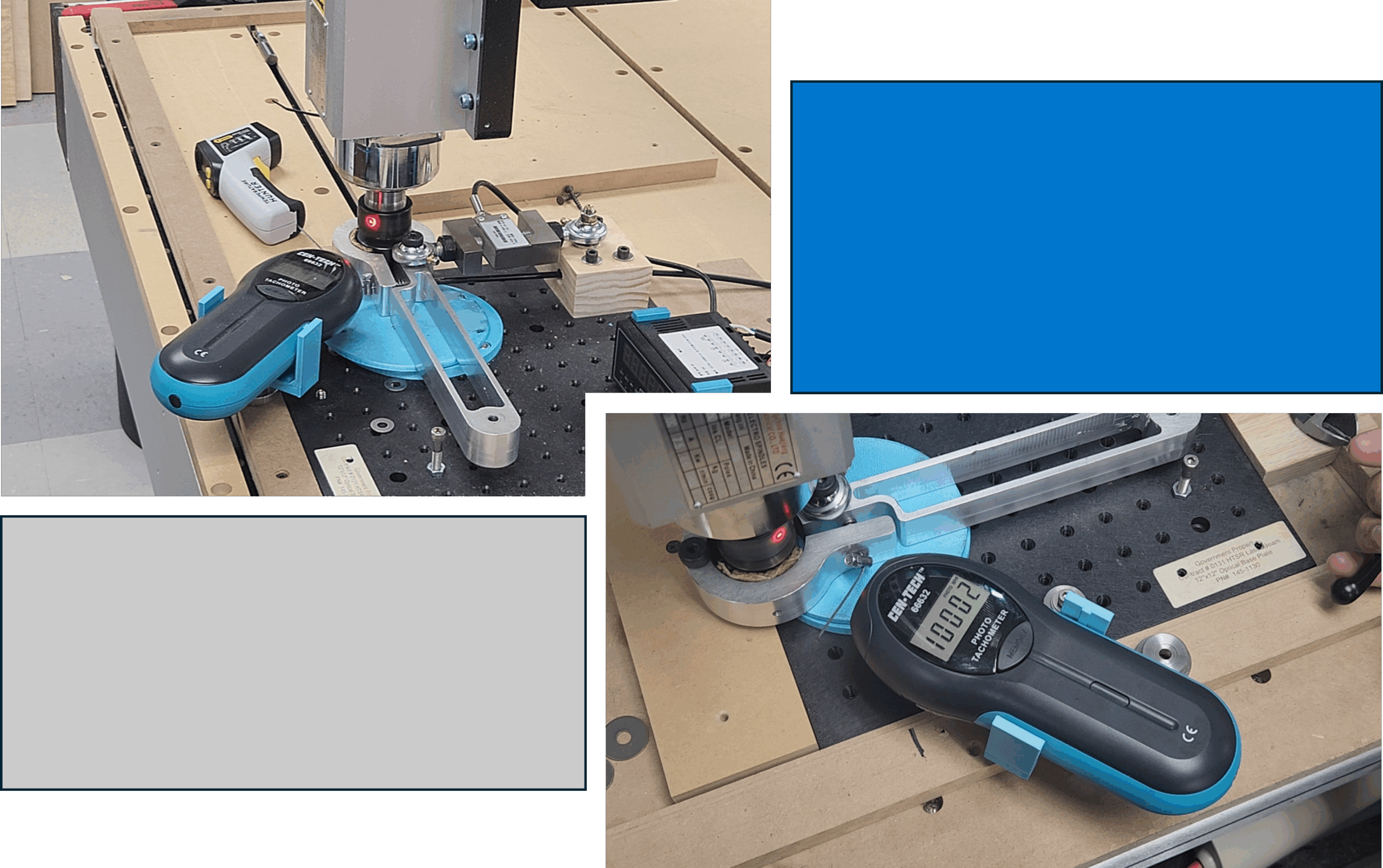
Spindle Horsepower and Torque Testing
Power claims are meaningless until they are measured. We test our spindles using a Prony brake and tachometer to record the exact torque required to stall the motor and the RPM at which it occurs. This data-driven approach provides verifiable horsepower and torque metrics under load, not just on paper. The result is a spindle you can trust to maintain cutting power where consistency and strength matter most.
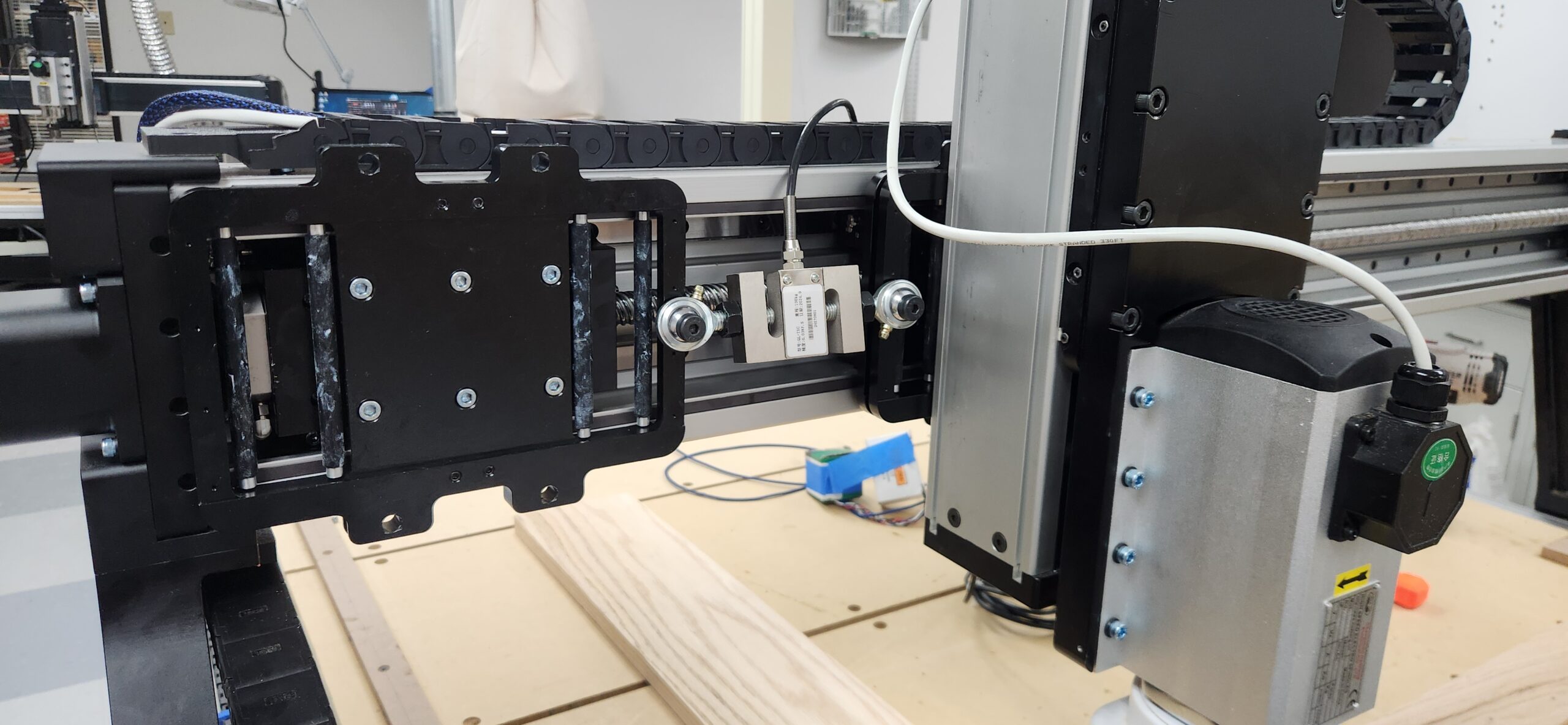
Lateral Cutting Load Analysis
Every cut exerts side-load stress on a CNC machine. To validate the Fusion Pro's resilience, we use a push-pull gauge to measure the precise force required to move the carriage during cutting and at rest. The results demonstrate smooth, consistent resistance—evidence of high-quality ball screws, linear rails, and bearings working in unison. This is how the Fusion Pro maintains its performance under load, rather than flexing or drifting like lighter-duty machines.
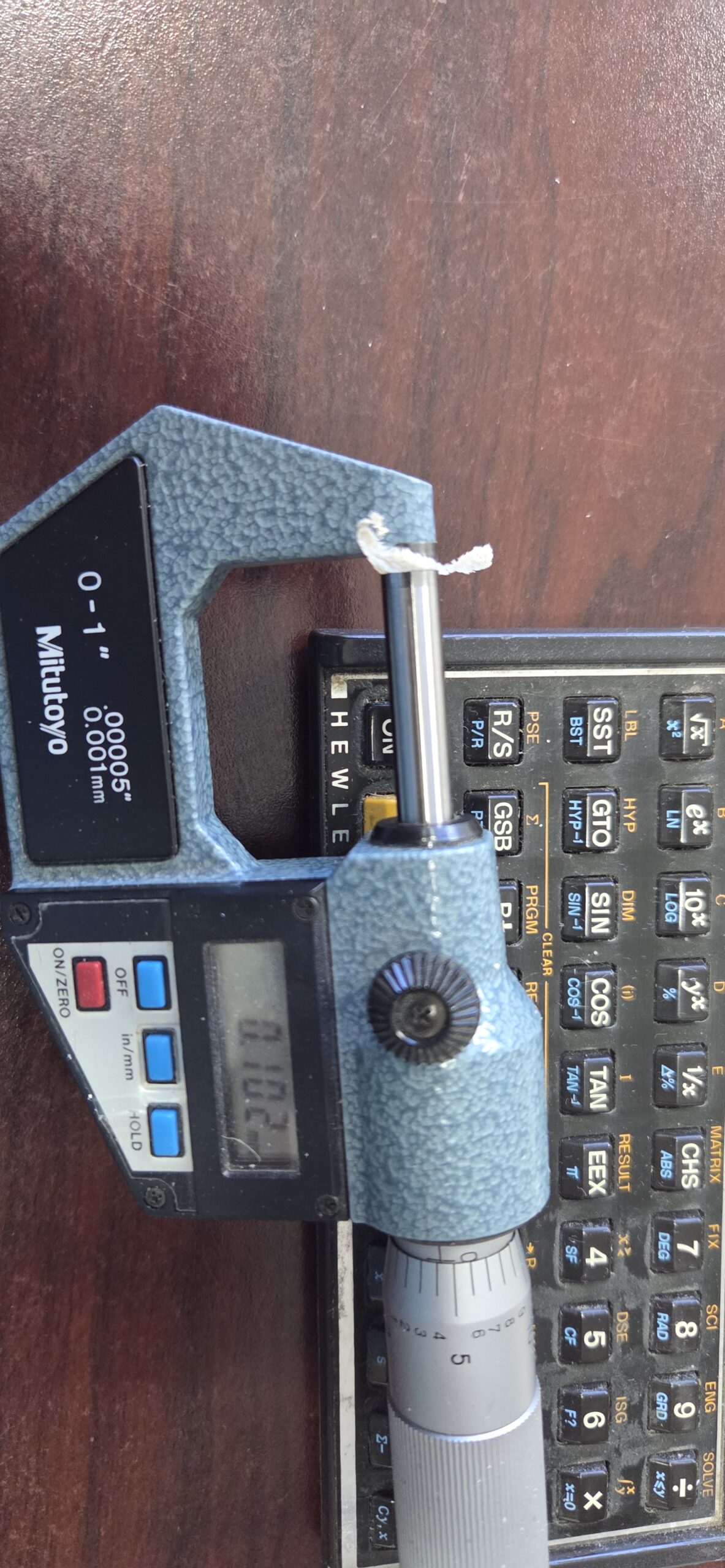
Deflection Testing
Rigidity isn't just a claim—it's a measurable metric. Using a crane scale to apply load, a digital level to record angular movement, and a micrometer to track linear deflection, we test the Fusion Pro under real-world stress. The results show deflection measured in microns, not millimeters. That level of stiffness is what keeps cuts accurate, edges clean, and tolerances repeatable, even in demanding materials.
Fusion Pro CNC Deflection Test — Just 0.008mm Under Max Load
This video demonstrates a structural load simulation of the Fusion Pro CNC frame in Fusion 360. The colors are exaggerated to highlight stress distribution, but the actual measured deflection is just 0.008mm (8 microns / 0.00031"). That's roughly 15 times stronger than the minimum standard for rigidity, proving why the Fusion Pro CNC delivers precision cuts that other machines in its class can't match.
Fusion 360 exaggerated simulation showing 0.008mm deflection under maximum load — over 15x better than industry standards.
Positional Accuracy Validation
True accuracy is not what the software commands, but what the machine actually does. We validate the Fusion Pro CNC using precision glass DRO scales, measuring commanded motion against real-world movement with accuracy down to the micron. The result is verifiable positional accuracy and repeatability you can trust, cut after cut.
Fusion Pro CNC Positional Accuracy Test — Verified with Glass Scales
This video demonstrates the Fusion Pro CNC's positional accuracy testing with high-resolution glass scales. The test verifies how closely commanded movements match actual carriage positions, measuring down to microns. By validating positional repeatability with precision instruments, Fusion CNC proves that the Fusion Pro is engineered for professional-grade accuracy far beyond typical hobby CNC routers.
Glass scale testing verifying positional accuracy within microns — professional-grade precision.
Chip Load Optimization
Chip load is the science behind every clean, efficient CNC cut—the balance of feed rate, spindle speed, and tool geometry. We designed the Fusion Pro CNC to maintain proper chip loads even at aggressive speeds, thanks to its rigid frame, precision ball screws, and powerful spindle. The result? Longer tool life, faster cuts, and smoother finishes. Regardless of what you are cutting, the Fusion Pro provides the control and consistency to dial in the perfect chip load every time.
Science Meets Craft
We are bringing science and engineering to your craft.