Most people buy a small machine first and then upgrade.
If you’re getting into CNC woodworking or manufacturing, there’s a common piece of advice you’ll hear: start small. It seems logical. A smaller, less expensive hobby machine feels like a lower-risk way to learn the ropes. But here’s a truth that many seasoned professionals will tell you: you’re probably going to end up buying two machines.
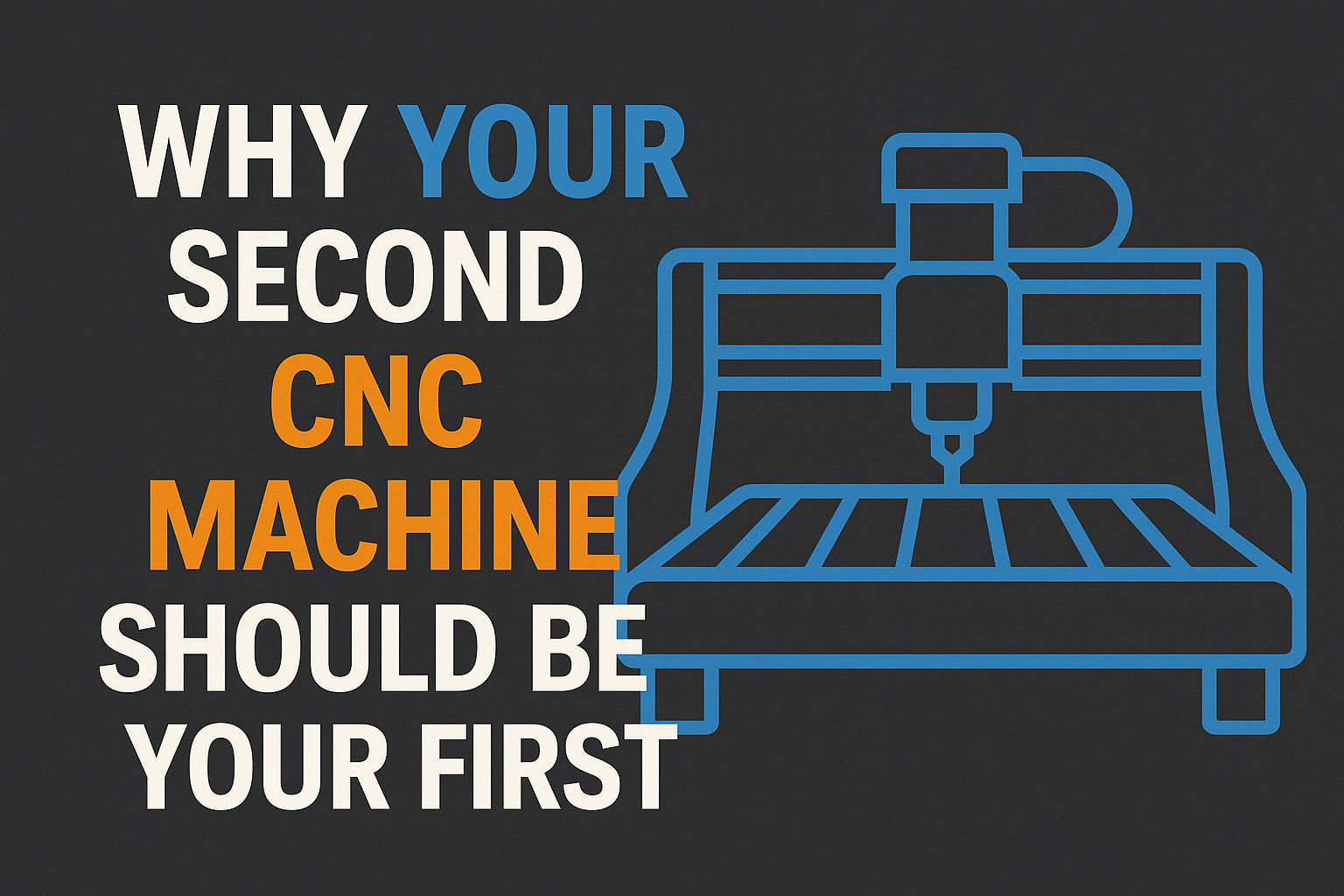
The first is the one you start with. The second is the one you buy a year or two later, after you’ve outgrown the first one. So, what if you could skip that frustrating and expensive first step?
This isn’t just a gut feeling; it’s a predictable pattern. The journey from a hobbyist machine to a professional one is so common because the initial reasons for buying small are quickly overshadowed by the real-world demands of production. Let’s have a real conversation about why your second machine should have been your first.
The Predictable Path of Outgrowing Your CNC Equipment
When you first start, your needs seem simple: a small footprint, a budget-friendly price, and software that’s easy to learn. A desktop hobby machine, which can range from $2,000 to $10,000, seems to fit the bill perfectly (CAMaster, 2024). For a while, it works. You learn the software, run a few projects, and get a taste of what’s possible.
But then, your ambition grows. You want to work faster, use harder materials, or produce more complex designs. This is where the limitations of a light-duty machine become clear. You start noticing a lack of rigidity, which affects repeatability. The spindle bogs down, leading to longer run times and inconsistent finishes. You spend more time troubleshooting than producing.
This isn’t a unique experience. The drive to upgrade is a significant trend across industries. A recent report on equipment financing found that businesses are nearly three times more likely to increase their equipment acquisitions than to decrease them, with 42% planning to boost their investments in the coming year (Equipment Leasing & Finance Foundation, 2024). This data points to a clear pattern: growth and ambition inevitably lead to the need for better, more capable equipment.
The Real Cost of Starting Small in CNC
Starting with a hobby machine might seem like saving money, but the total cost of ownership often tells a different story. When you factor in the lost time from troubleshooting, the wasted material from failed cuts, and the inevitable cost of a second, more capable machine, the initial savings disappear. The mid-range and high-end CNC routers, which range from $10,000 to over $150,000, are priced that way for a reason: they are built for reliability, precision, and performance (CAMaster, 2024).
This is where the conversation shifts from price to value. The global CNC machine market is projected to grow from $95.29 billion in 2024 to nearly $195.59 billion by 2032, with a compound annual growth rate of 9.9% (Fortune Business Insights, 2025). This growth isn’t just in large-scale industrial manufacturing; it’s driven by small businesses, prototyping shops, and educational institutions that need professional-grade capabilities in a smaller, more affordable package.
The CNC Machine We Built, We Built Because We Needed It
We’ve been there. We went through the cycle of buying and outgrowing machines. That’s why we built the Fusion Pro. We needed a machine that didn’t exist: one with the rigidity and power of an industrial machine but without the massive footprint and six-figure price tag. We wanted a professional machine that could fit in a garage, a school shop, or a maker space.
The Fusion Pro was designed to be the machine you upgrade to, but it’s priced and designed to be the one you start with. It offers a precision-machined aluminum frame, a steel stand for stability, and modular spindle options (2.2kW or 4kW) to match your production needs. It’s compatible with the software you already use, like VCarve, Aspire, and Fusion 360, and it’s built for low maintenance and backed by real support.
Choosing the right equipment from the start isn’t an expense; it’s an investment in your own growth. With 82% of businesses using financing for their equipment acquisitions, it’s clear that smart investment is key to scaling (Equipment Leasing & Finance Foundation, 2024). The top reasons for financing, such as optimizing cash flow and protecting against equipment obsolescence, are the very reasons why starting with a more capable machine makes sense in the long run.
Your First CNC Machine Should Be Your Last
If you’re serious about CNC, you’re going to grow. The question is whether your first machine will grow with you or hold you back. Instead of planning for an inevitable upgrade, consider starting with the machine you’ll want to keep for years to come. Your second machine should be your first. And the Fusion Pro is built to be exactly that.
References
CAMaster. (2024). Budgeting for a CNC router: Cost considerations and ROI analysis. https://www.camaster.com/budgeting-for-a-cnc-router-cost-considerations-and-roi-analysis/
Equipment Leasing & Finance Foundation. (2024). Equipment finance industry horizon report 2024. https://www.leasefoundation.org/industry-research/horizon-report/
Fortune Business Insights. (2025). CNC (computer numerical control) machine market size, share & industry analysis. https://www.fortunebusinessinsights.com/industry-reports/computer-numerical-controls-cnc-machine-tools-market-101707.
Hashtags: #FusionCNC #CNCupgrade #Makerspace #CNCrouter #CNCmachine #DigitalFabrication #SmallBusinessTools #WorkshopGear #CNCforWoodworking #DIYCNC